


You want the Maasai Mara at dawn — the light low and gold, a lion pride still lying in the grass from the night before, the kind of silence that makes you lower your voice without being told to.
You also want to end the trip barefoot on a beach in Zanzibar, watching a dhow move across the horizon with absolutely nothing on the agenda.
Two very different feelings. Two very different landscapes. And most safari operators will quietly make you choose between them.
Not because it can’t be done. Because doing it properly has traditionally meant absorbing a cost nobody advertises: a wasted travel day, a scheduled flight with two or three stops, a night in a transit hotel you never wanted to book.
By the time you’ve “connected” the bush to the beach, you’ve spent a full day of a seven-day trip sitting in airports instead of standing in either place you actually came for.
That gap — the dead space between the wild and the water — is the whole problem. And it’s the one thing a private-air itinerary is specifically built to remove.
The Real Cost of "Doing Both"
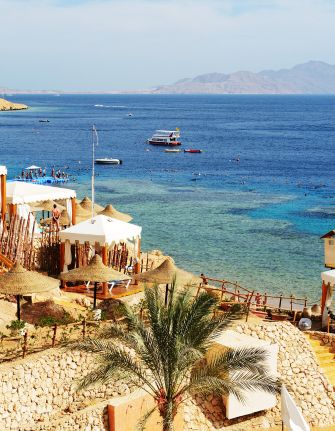
Ask a typical safari company to combine a Kenya bush stay with a Zanzibar beach stay, and here’s roughly what you’ll get: an early wake-up call at camp, a bumpy transfer to a dirt airstrip, a scheduled light-aircraft hop back to Nairobi or Arusha, a multi-hour wait at the domestic terminal, a connecting flight to the coast, and then a road transfer to your hotel that gets you there well after dark.
On paper it’s “one itinerary.” In practice, it’s an entire day — sometimes closer to a day and a half — spent in transit rather than in either destination you paid to experience.
For a two-week holiday, that’s an annoyance.
For a seven-day trip, it’s a different category of problem. It means roughly 15% of your total time away is spent in terminals, on tarmac, or waiting for a connection, rather than watching elephants move across the plains or floating in the Indian Ocean.
Multiply that across a group, a honeymoon, or a once-a-year window carved out of an impossible schedule, and the maths stops being trivial.
There’s also a quieter cost: decision fatigue. Scheduled flights mean fixed departure times, which mean the itinerary starts dictating your mornings instead of the other way around. You end up cutting a final game drive short to make a flight, or arriving at your beach villa too late and too tired to enjoy the first evening you were looking forward to for months.
None of this is anyone’s fault — it’s simply what happens when two extraordinary destinations are stitched together with ordinary infrastructure.
For travelers who’ve built careers and lives around not wasting time, that’s not a minor inconvenience to shrug off.
It’s the difference between a trip that feels effortless from the first hour to the last, and one that feels like a project you had to manage.
What Changes When You Fly Private
A private-air transfer between the savannah and the coast collapses that lost day into an hour or two in the sky. There’s no terminal to sit in, no boarding call to wait for, no fixed departure time that isn’t built around your actual morning. You finish a final game drive, take a slow lunch back at camp, and walk onto an aircraft that was waiting for you — not the other way around.
The difference isn’t just time saved, though that matters. It’s the psychological shift of never leaving “trip mode.” There’s no jarring re-entry into commercial travel — no crowded gate, no generic airport lounge, no sense that the magic of the safari has ended and you’re now simply “getting somewhere.”
The private aircraft becomes a continuation of the experience itself: low enough, at times, to see the landscape change beneath you from dust-gold savannah to the deep blue fringe of the coastline. You watch the transition happen in real time, from your window, rather than reading about it on a departures board.
This is the entire premise behind Azure Safaris: luxury bush to beach safaris, by private air, across East Africa. The aircraft isn’t a luxury add-on bolted onto a standard itinerary — it’s the mechanism that makes seven days feel like fourteen, because none of those seven days are spent in transit purgatory. Every hour you’ve set aside for the trip is spent either in the bush or on the coast, never in between.
A Sample Week: Kenya to Zanzibar
Days 1–4 — Maasai Mara
You arrive into a private conservancy camp rather than a high-traffic public reserve — fewer vehicles, more exclusive traversing rights, and a game-viewing experience that isn’t shared with a dozen other safari trucks jostling for the same sighting.
Days settle into an unhurried rhythm quickly: an early-morning game drive while the light is best and the predators are most active, a long midday break back at camp to rest or simply do nothing, and a second drive in the late afternoon as the heat breaks and the plains come back to life.
The Mara delivers on its reputation. This is Big Five territory, and depending on the season, it’s also migration territory — wildebeest and zebra moving across the plains in numbers that are genuinely difficult to describe until you’ve seen them.
Evenings are equally deliberate: sundowners overlooking the escarpment, dinner under canvas, and a stillness after dark that most people haven’t experienced since childhood.
This is East Africa at its most cinematic — the same landscape that inspired Out of Africa decades before “safari” became shorthand for a category of travel rather than a specific, singular place.
Day 4 — The Transfer
Rather than an early departure that cuts the morning short, the day starts with one final game drive — often the best sighting of the stay comes on the last morning, when you’re relaxed enough to actually notice everything around you. A slow lunch back at camp follows, and then a private aircraft collects you directly from the airstrip.
There’s no return leg to Nairobi. No overnight stop at a transit hotel. No multi-hour layover watching a departures board. The aircraft takes you directly toward the coast, and somewhere over Tanzania or the channel, the landscape beneath you changes from ochre plains to turquoise water. You go from dust to ocean air in a single afternoon — and you land in Zanzibar with the rest of the day still ahead of you.
Days 5–7 — Zanzibar
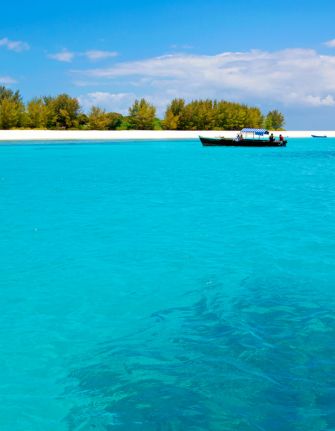
The second half of the trip is built around doing as little as possible, and doing it beautifully. A private villa or beachfront suite becomes your base — warm water a few steps away, sea breeze instead of savannah dust, and a schedule that, for the first time all week, has nothing on it.
This isn’t an afterthought tacked onto the safari; it’s the intentional counterweight to it. Where the Mara asked you to wake early and stay alert to your surroundings, Zanzibar asks nothing of you at all. Days can be spent on the water, exploring Stone Town’s narrow streets and spice markets, or simply not leaving the villa. This is where the trip resets — the restorative half of the arc, deliberately left unstructured so it can become whatever you need it to be by the time you arrive.
Who This Trip Is For
This itinerary is designed for people managing real constraints, not people with unlimited holiday time. Three types of travelers tend to gravitate toward exactly this shape of trip:
- Executives and entrepreneurs who can realistically take one week away from the business, not two. The private-air transfer is what makes a seven-day window enough to genuinely experience both the bush and the beach, rather than forcing a choice between them or diluting both with rushed logistics.
- Honeymooners who want the adventure and the romance in equal measure, without personally engineering the connective logistics between two very different destinations. The Mara delivers the sense of shared adventure; Zanzibar delivers the slow, private time together that a honeymoon is supposed to include. Neither half has to be shortened to accommodate the other.
- Repeat safari travelers who’ve already done a lodge-only trip — often more than once — and are now looking for the contrast that a genuine bush-to-beach itinerary provides. For this traveler, the wildlife alone is no longer the whole draw; the juxtaposition is.
What connects all three is the same underlying expectation: the trip should feel seamless from the first morning to the last, every hour should count, and the logistics should be invisible rather than something to be endured.
Why East Africa Is Built for This
Few regions on earth put world-class wildlife and world-class coastline within such easy reach of each other.
Kenya, Tanzania, and Zanzibar sit close enough that a private-air transfer between them takes roughly the length of a long lunch, not the better part of a day.
That’s not true of most other safari destinations on the planet — many require a long-haul flight simply to reach the wildlife, with any coastline hours or days further still.
This proximity is precisely why “bush to beach” works here in a way it doesn’t elsewhere, and it’s why East Africa in particular has become the reference point for this kind of trip.
The geography does half the work; the private aircraft does the rest.
Where the Wild Meets the Water
A week that starts with lions at first light and ends with your feet in the Indian Ocean isn’t two separate trips stitched awkwardly together.
Done properly, it’s one continuous experience with a single emotional arc — adventure, then stillness; alertness, then rest.
The only thing that should stand between those two worlds is a couple of hours in the air, not a day lost to logistics, terminals, and connections you didn’t ask for.
That’s the difference a private-air itinerary makes, and it’s the difference Azure Safaris is built around.
Ready to see what a seamless week looks like on your calendar?

